
A Practical Guide for Montessori at Home
How to shape a home that grows curiosity and cooperation

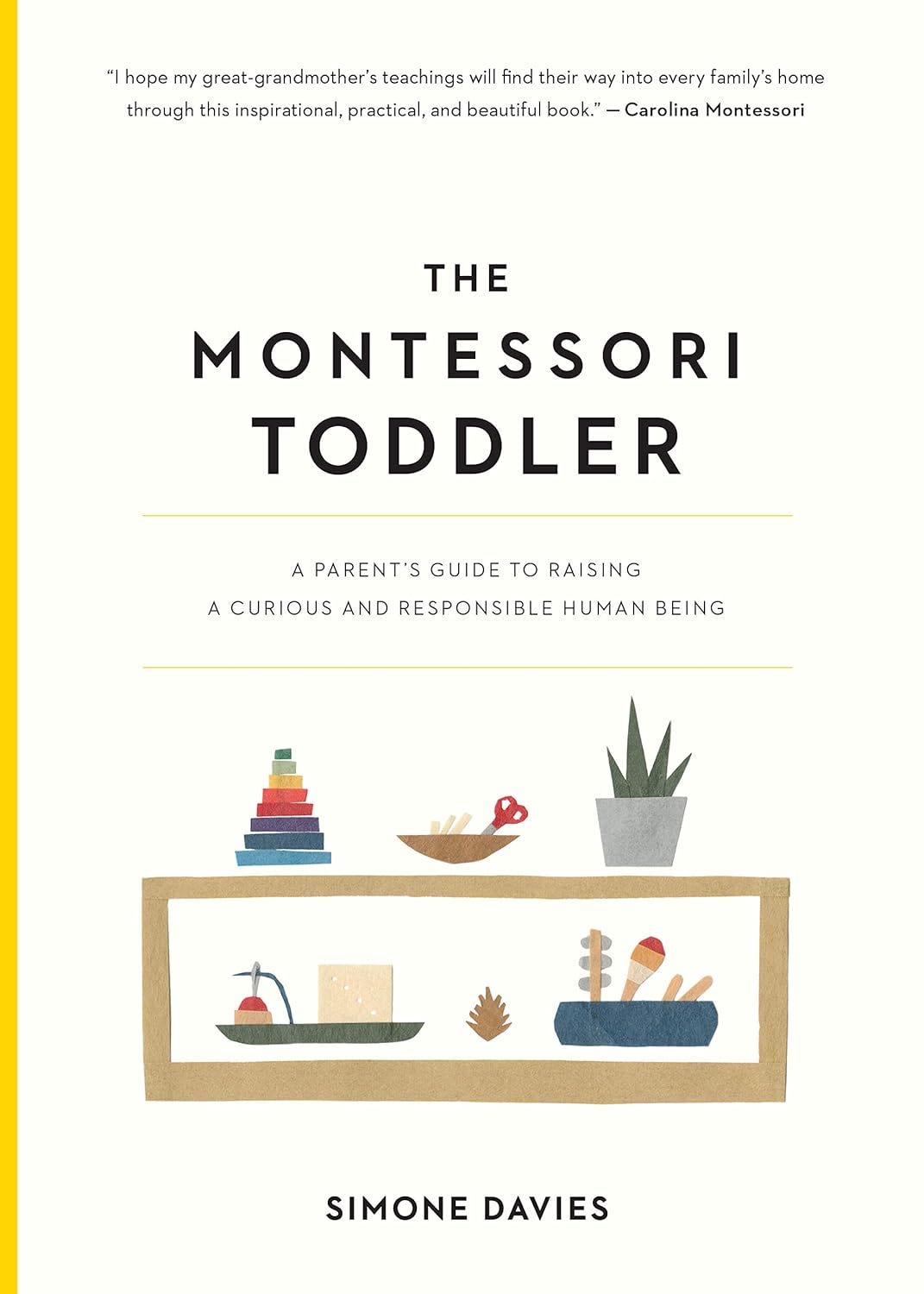
Drawing on The Montessori Toddler by Simone Davies
Toddlerhood can feel like living inside a small weather system. Sunshine, thunder, rain, then back to clear skies before lunch. One minute your child is carefully lining up spoons. The next, tears over a sock seam. Underneath that intensity is something good. Toddlers are not trying to make life hard. They are trying to make sense of the world with the tools they have right now.
Montessori gives us a friendlier lens. Instead of “How do I stop this behavior,” you ask, “What is my child trying to learn.” With that shift, home feels less like a battlefield and more like a workshop where curiosity, independence and cooperation grow.
Below is a shortened, practical guide to bring Montessori into your home with a toddler. No special materials required. Just a few thoughtful adjustments, a calmer rhythm and a mindset that treats your child as a capable person in progress.
What Toddlers Are Really Doing
Toddlers move faster than their words. Feelings arrive big and unfiltered. They repeat, test, carry, pour, and sort because they are building brain and body at the same time. What looks like defiance is usually a skill under construction. Your child might be learning how to put things in order, how to match, how to carry with control, or how to do it “myself.”
Montessori meets that reality. You offer real tasks, clear limits and chances to try again. You slow down. You observe. You prepare the space so the child can succeed without constant correction.
A useful mantra: Right now my child is showing me what they need to practice.
Core Ideas To Hold In Mind
The prepared environment. Set up spaces so your toddler can act independently. Low hooks for coats. A stool near the sink. A basket with two or three choices, not twenty. When the space guides the behavior, you do not need to nag.
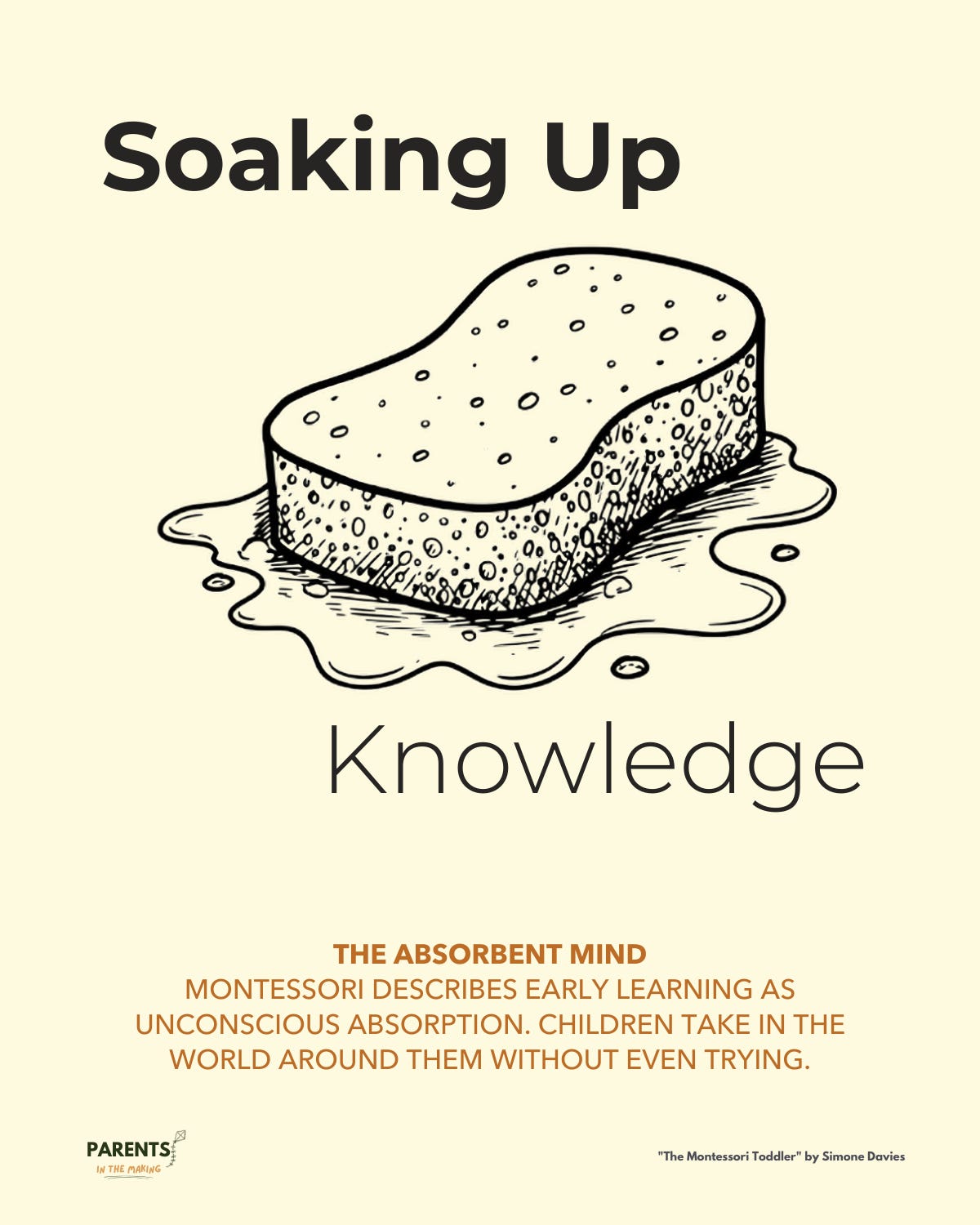
The absorbent mind. From birth to six, children soak up the world by living in it. They learn from what we model and what the space allows them to do. Your tone, your patience, your order, and your joy become part of their inner world.
Sensitive periods. Toddlers often fixate on a single theme. Order, movement, language, tiny details. Notice the current obsession, then offer matching tasks. That alignment cuts down on battles and lifts engagement.
Freedom within limits. Children need real choice inside clear boundaries. “You may pour the water at the table. You may not pour on the floor.” Fewer lectures, more consistent action. Respectful, steady, predictable.
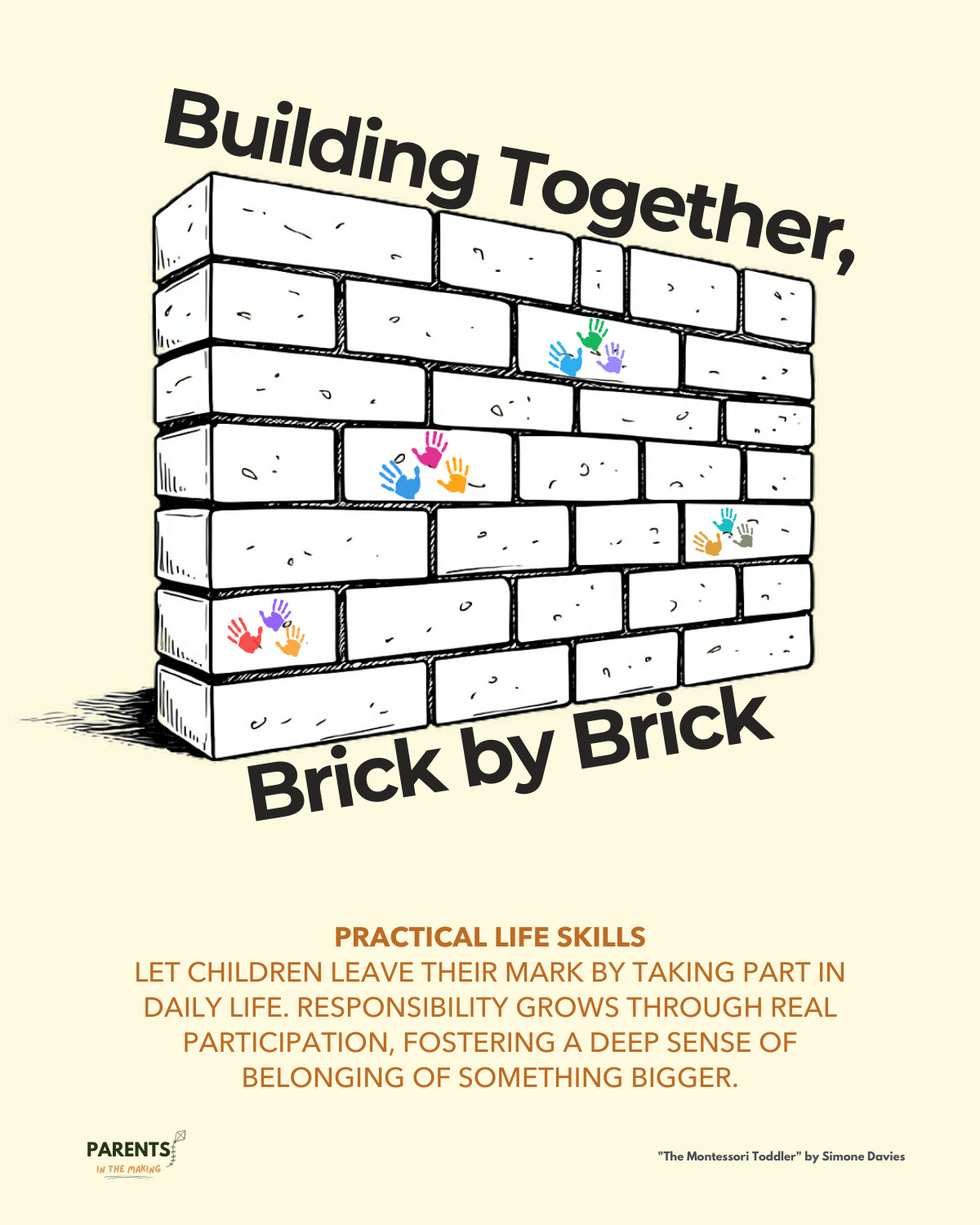
Hands-on learning. Pouring, sweeping, washing, scrubbing, carrying, setting the table. These are not chores for later. They are meaningful work now. They build coordination, focus, belonging, and pride.
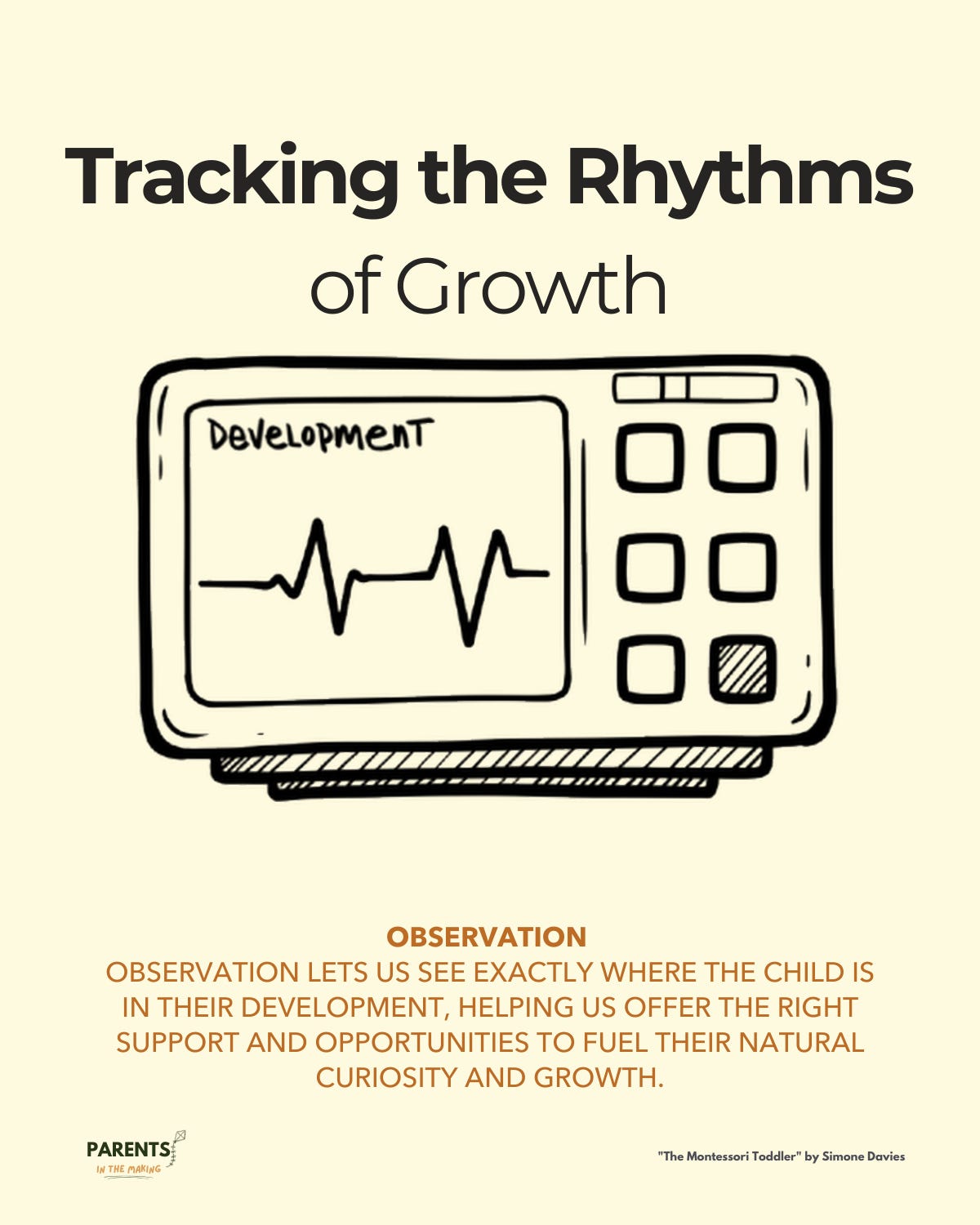
Observation. Watch like a camera. What is my child drawn to. Where do they get stuck. When are they most focused. Let your observations shape the next small change in the environment.
The Prepared Adult
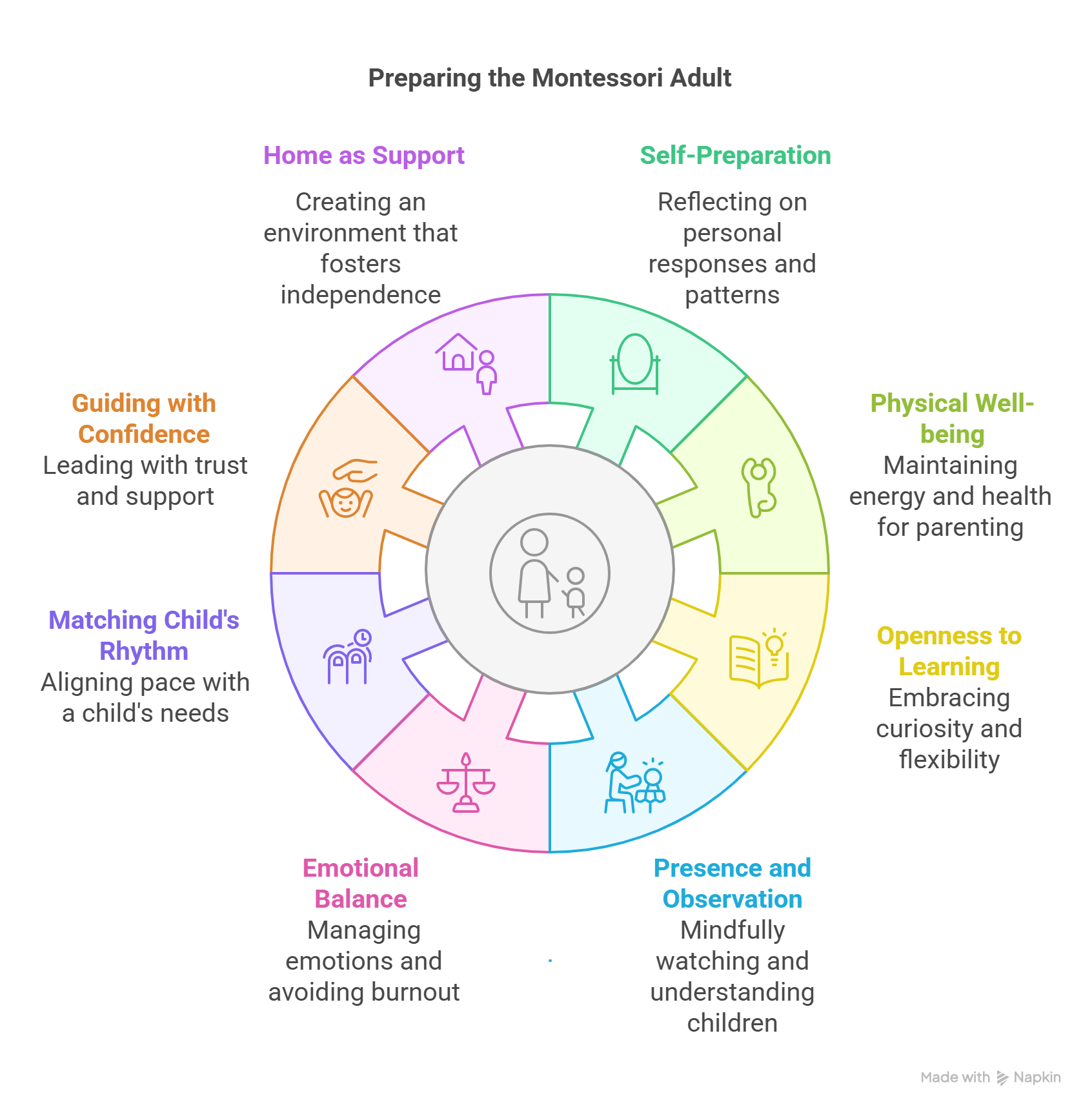
Montessori is not just child work. It is adult work too. We cannot offer calm we do not have. That does not mean perfection. It means small habits that refill your cup so you can show up with steadier energy.
Care for the body. Eat, sleep when you can, move a little.
Care for the mind. Learn something that delights you. Curiosity is contagious.
Practice presence. One task at a time, one request at a time.
Slow the pace. Leave five extra minutes for shoes or zippers.
Repair quickly. If you snap, circle back with a short apology and a redo.
Think of yourself as the guide on a hike. You set the pace, point out the path, and let the child do as much walking as they can.
Room by Room
You do not need to redesign your home. Choose one or two changes per space. Keep it simple, beautiful, and reachable.
Entryway
Low hook for a coat and a small basket for shoes.
One lightweight jacket and two pairs of shoes on display. Rotate extras out of sight.
A little bench or sturdy stool to sit while dressing.
Goal: practice dressing and undressing with minimal help.
Kitchen
A small water dispenser or a child-size pitcher, a cloth for spills, real cups.
One low shelf or basket with snack plates, napkins, and a banana or sliced fruit.
Invite real tasks: wash produce, tear lettuce, stir batter, wipe the table.
Goal: independence with food and the joy of contributing.
Bathroom
Stool, child-height towel, a small basket with toothbrush and hairbrush.
Simple toileting setup if you are ready: potty, extra underwear, clean-up cloths.
A mirror at child height for self-care.
Goal: care of self becomes routine, not a power struggle.
Bedroom
Floor bed or low bed if it fits your family.
Two or three pajamas on a low shelf.
A simple bedtime basket: one book, one calm object, one soft light.
Goal: smoother transitions around sleep.
Living Room
One low shelf with a few open-ended materials. Rotate weekly.
A small rug or mat to define a working space.
A plant to water, a duster, a hand broom and pan.
Goal: focus grows when materials are limited and cared for.
Learn how to raise a happy, helpful & confident child:

Ebook based on “Hunt, Gather, Parent” by Michaeleen Doucleff:
Hunt, Gather, Parent - A Visual Summary
Practical Life: Real Work For Real Growth
Practical life is the heart of Montessori at home. Start small and build.
Pouring and transferring. Water from child jug to cup. Dry beans from one bowl to another with a spoon.
Care of home. Wipe a spill, sweep crumbs into a pan, dust a low shelf.
Care of self. Brush hair, wash hands, blow nose, choose clothes.
Food prep. Peel a banana, slice soft fruit with a child-safe knife, spread butter with a blunt knife.
Gardening. Water a plant, wipe leaves, carry a small watering can.
Choose real tools that fit small hands. Demonstrate once slowly, then step back. Expect spills. Put cleanup within reach so your child can restore order on their own.
Daily Routines
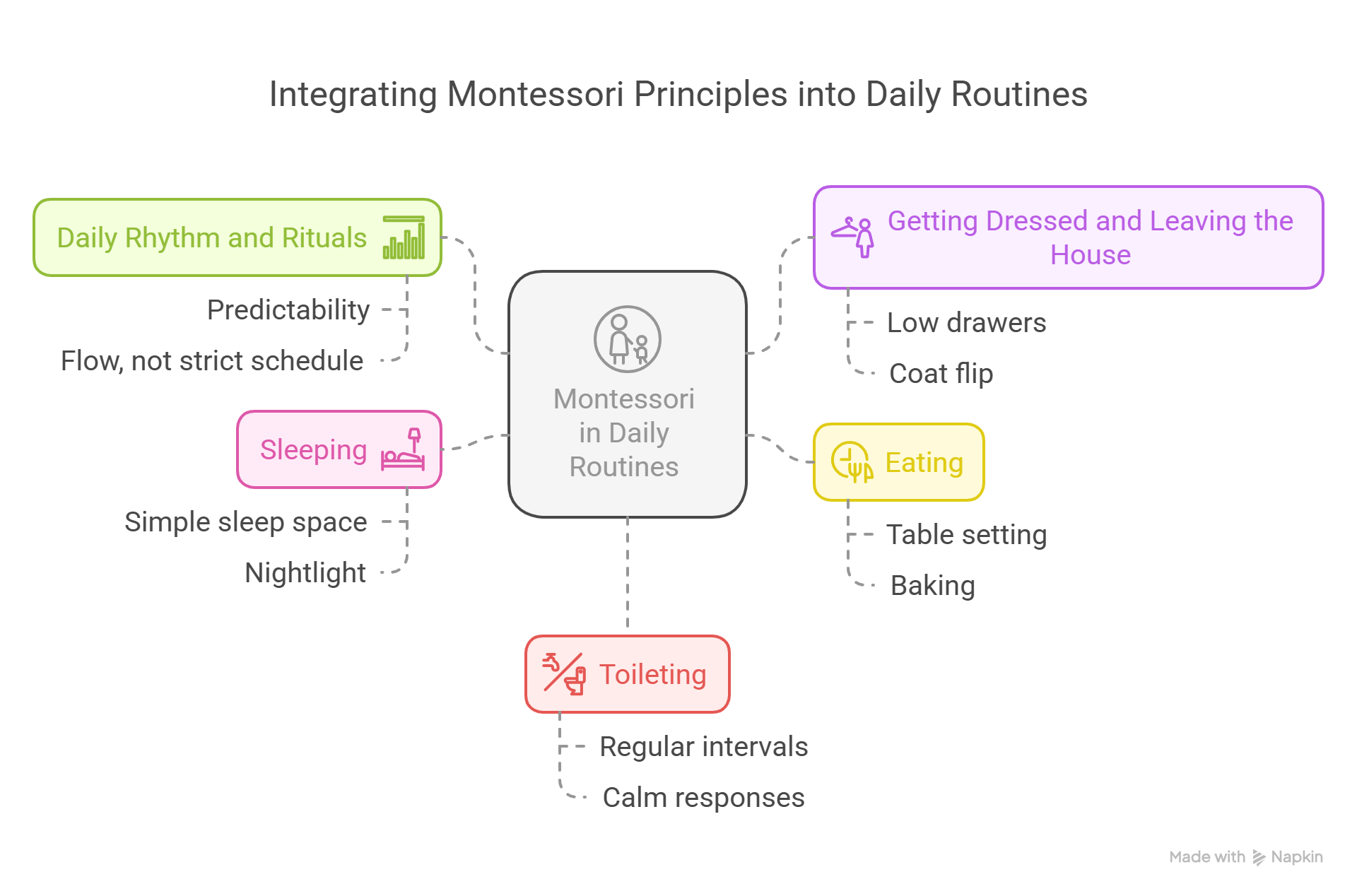
Language. Offer the real words for things. Sing. Read the same few books again and again. Follow your child’s interests when you choose new words and stories.
Movement. Toddlers need to carry, climb, push, pull, dig, and balance. Make time outdoors daily when possible. Inside, offer heavy work in simple ways, like carrying laundry to the machine or transporting books to a shelf.
Calm. Order supports calm. So do clear endings. Use baskets and trays so each activity has a beginning and a finish. Tidy together once or twice a day. Keep background noise low. Turn off distractions when you want deep play.
Toileting. Readiness is a spectrum. Invite participation early: sitting on a potty at bath time, pulling pants up and down, washing hands after. Keep the tone light. Accidents are information, not failure.
Mealtimes. Toddlers love to help. Involve them before you expect sitting. A tiny job shifts the energy. Use small portions, real dishes, and a cloth for spills. Offer the same meal you are eating when possible, with one familiar part on the plate. Respect appetite. Bodies regulate well when pressure is low.
Useful Skills to Coach at Home
Toddlers run a full-time apprenticeship in being human. They study us, the room, and gravity. We can help, lightly. No banners. No pep talks. Just small habits that teach on repeat.
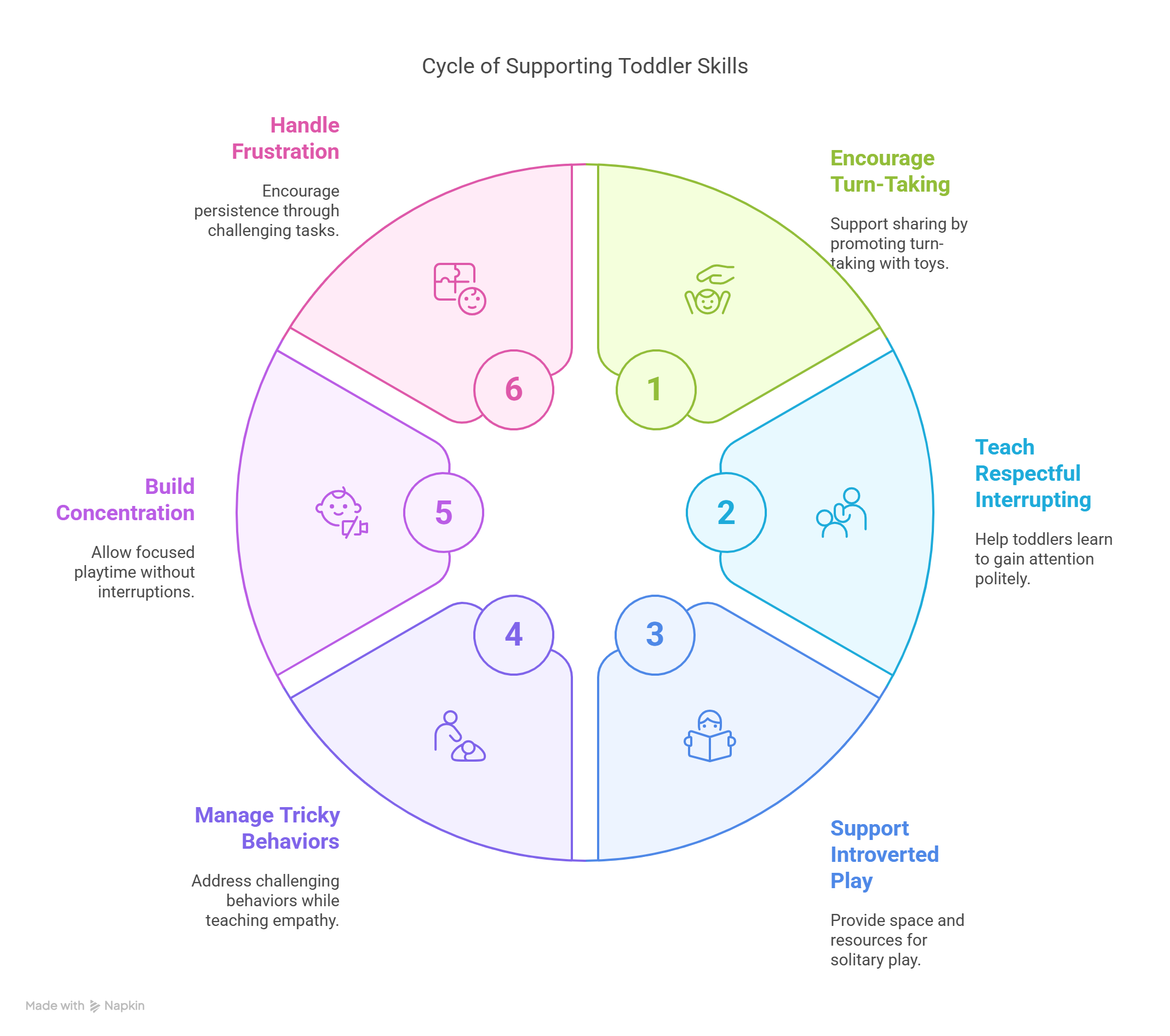
Sharing → Turn-Taking
Forced sharing creates drama and very little learning. Try turn-taking instead. One toy, one turn, then the next person when the first child is done. Name the rule once, then let the clock and the toy carry the point.
Interrupting, Respectfully
Teach your toddler to place a hand on your arm or leg when they need you. You rest your hand on theirs to show you noticed. Then finish your sentence and respond.
It is small. It feels ceremonial. It works in the supermarket line.
Space for the Quiet Child
Some toddlers recharge alone. Respect that battery. Keep a cozy nook for solo play, a small stash of books and permission to step back from the crowd without a speech about being social.
Invite, do not push. Five minutes of calm now beats thirty minutes of fallout later.
Tricky Behaviors, Kind Limits
When a toddler hits, bites, or throws, split the moment: feeling yes, action no. Name the feeling. Hold the limit. Then guide the repair.
Help them bring the block back, fetch a cloth, check on the other child. Repair is the second half of learning. Accountability without shame.
Protecting Concentration
If your child is in the zone, let the zone do its work. Save instructions for later. A small mat or table defines a workspace and quietly tells siblings to steer around it.
Offer help only when stuck, not when merely slow.
Handling Frustration
Struggle is not a fire to put out. It is the heat that bakes the cake. Wait and watch. If your child is about to give up, offer one small step, not the whole staircase.
Break tasks into the next thing: start the zipper, hold the cup steady, show the first scoop. Praise for effort and avoid speeches.
Why this works
You are weaving lessons into ordinary minutes. The room carries half the message. Your tone carries the rest. Children get what they actually need: clear boundaries, a workable process, and the dignity of doing the work themselves.
You get fewer power struggles and more quiet competence. Not glamorous, but very effective.
Everyday moments turn into practice reps with meaning. Getting dressed, pouring water, brushing teeth.
Encouraging Curiosity
Children are already curious. No one has to coach a baby to reach for the table leg or a toddler to test how spoons behave on tile. Dr. Montessori watched this, noted it, and treated it as the engine of learning. Kids learn because they want to. Not because we deliver a speech.
Our job is to guard that drive. Not by cramming the day with stimulation, but by shaping an environment that lets curiosity stretch without pressure.
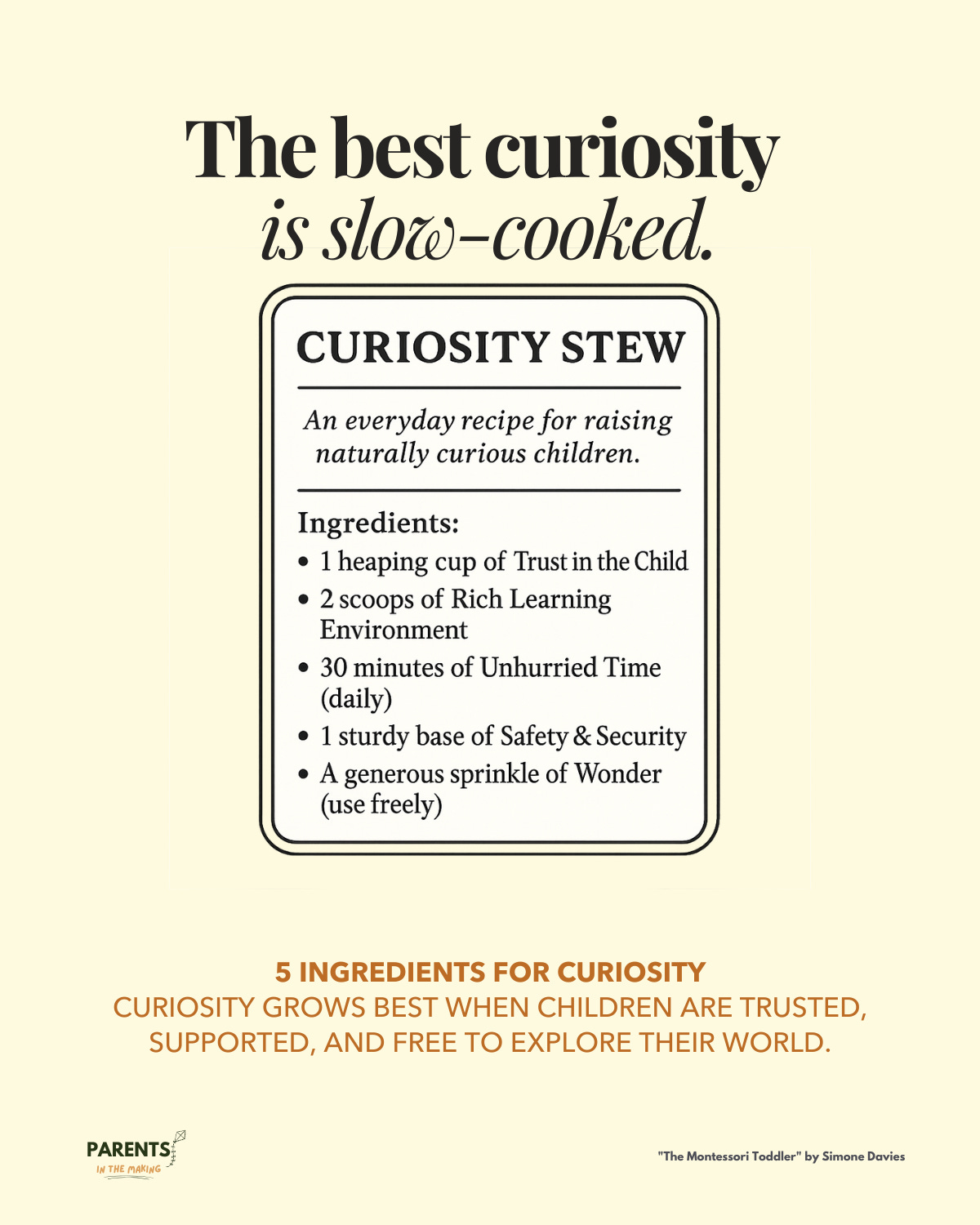
Five ingredients that keep curiosity alive
Trust
Trust that your child knows what they need to work on. Pace and interests vary for good reasons. When we believe the process is unfolding, we stop pushing and start preparing. If the environment is rich and responsive, learning shows up on its own timetable.
A rich environment
This is not a catalog spread. It is access. Nature on the balcony, real objects in low baskets, tools that actually work. Watch for the current obsession, then offer more of that material or that action.
Time
Go slow. Curiosity needs long, unhurried stretches. Toddlers do not thrive on a shuttle service from one activity to the next. When time opens up, focus lengthens, bodies settle, and discoveries stick.
A safe base
Exploration grows when there is a clear place to return to. A quiet corner, a familiar basket of books, your lap after a wobble. Safety is both a location and a tone. When children feel it, they range farther.
Wonder
Wonder is not taught by instruction. It appears when space and attention meet the ordinary. A shadow crawling across the floor. A snail on a wet wall. A beam of light on dust. Leave room for those small scenes and they will do the teaching.
Curiosity does not need fireworks. It needs a room that makes sense, an adult who watches more than lectures and enough time for questions to form. The rest follows.
When you are ready to add a little structure, keep it light. Aim for guidance, not control.
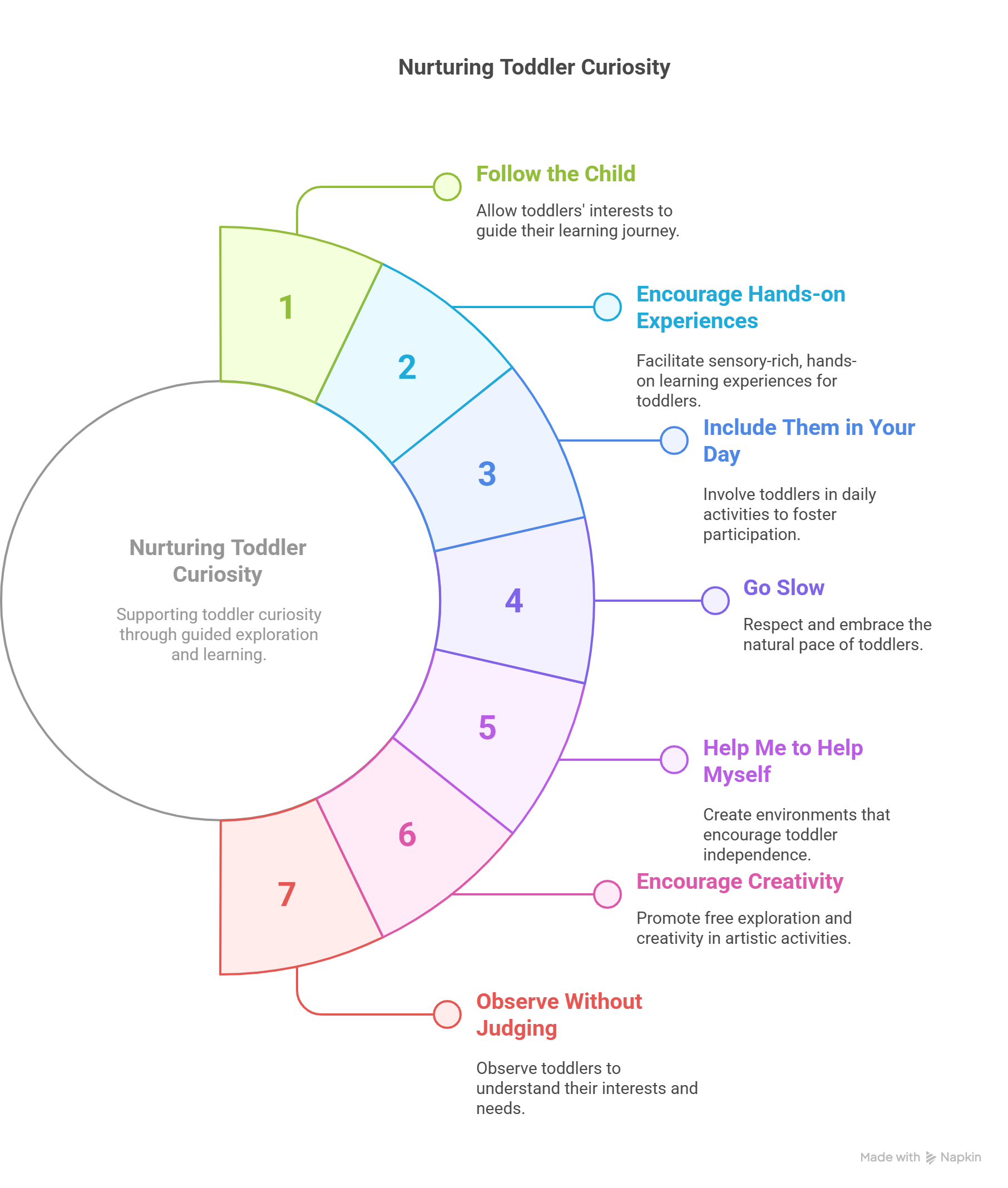
Follow the child
Let their interest lead. If they are locked in on blocks or ants, do not redirect. Deep focus is where the learning lives. You are the lifeguard, not the cruise director.
Encourage hands-on experiences
Toddlers learn through senses. Touch it, pour it, smell it, listen to it. Try small experiments together and chase books that match the current obsession. Swap a flat “no” for “here is a safer way.”
Include them in your day
Invite real jobs. Stir the batter, carry the mail, sweep the crumbs. It takes longer and teaches more. Contribution is much more powerful than entertainment.
Go slow
Match the toddler pace. Stop for the ants. Let them pour their own milk. Breathe while the zipper argues with physics.
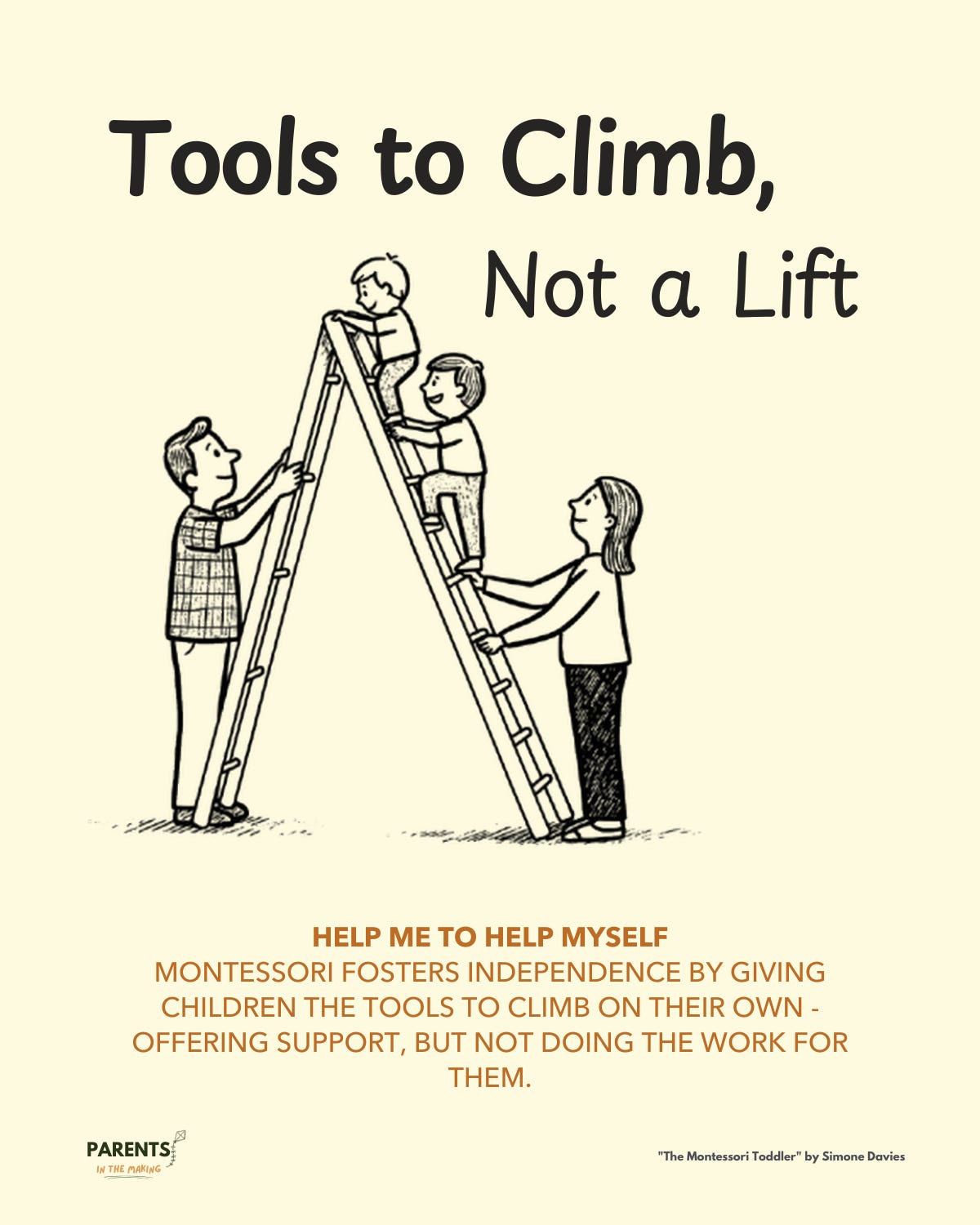
Help me to help myself
Set up the room so success is likely. Break big tasks into small steps. Show once, pause, then let them try. Step in only when needed. Step back when not.
Encourage creativity
Skip the scripted craft. Offer simple materials and time. Paper, crayons, glue, fabric scraps, pine cones. The goal is expression, not a perfect product.
Observe without judging
Watch like a camera. Notice what pulls attention, what needs practice, what keeps failing. Adjust the environment instead of the child. Fewer words, better fit.
A Closing Thought
Montessori is not about perfect rooms or perfect parents. It is about respect in action. You honor a child’s drive to become independent, then you build a home that makes independence possible. You give freedom inside kind limits. You let hands learn by doing. You slow down and notice.
Your toddler is already working hard to grow. With a few thoughtful changes, home can become the place where that work feels natural and joyful for both of you.
Quick Checklist
Low, reachable storage in every room
Fewer choices, clearly presented
Real tools, sized for small hands
Predictable daily rhythm
Short, calm limits with real choice
One practical task every day
Observing before intervening
Simple materials, rotated often
Outdoor movement whenever you can
You do not need to do it all. Choose one change, try it for a week, then layer the next. Montessori with toddlers is a gentle journey back to trust, presence and shared purpose at home.
Video Summary
Audio Summary
Visuals


Visual Metaphors


References
Davies, S. (2019). The Montessori toddler: A parent's guide to raising a curious and responsible human being. Workman Publishing Company.
I love your sponge for the absorbent mind!
Loved this, especially the part about toddlers being a ‘small weather system.’ That’s exactly what it feels like at home with my two-year-old 😅 I’m not a full Montessori parent, but I’ve found that giving him real tasks (even if it’s just pouring water or wiping spills) works like magic. Thank you for the reminder that it doesn’t have to be perfect, just consistent and respectful.